
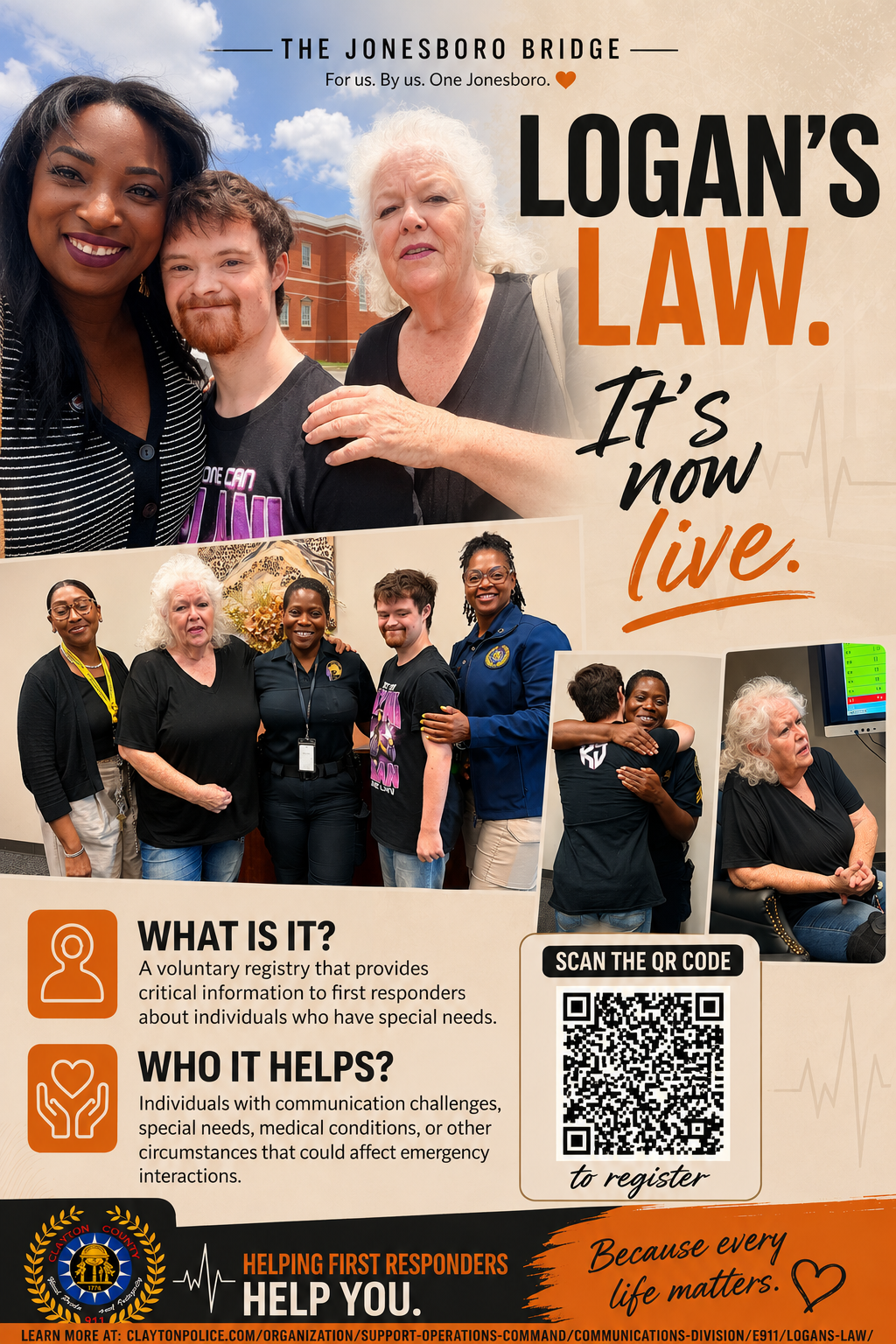
Clayton County Launches Logan’s Law Registry to Better Protect Residents with Disabilities
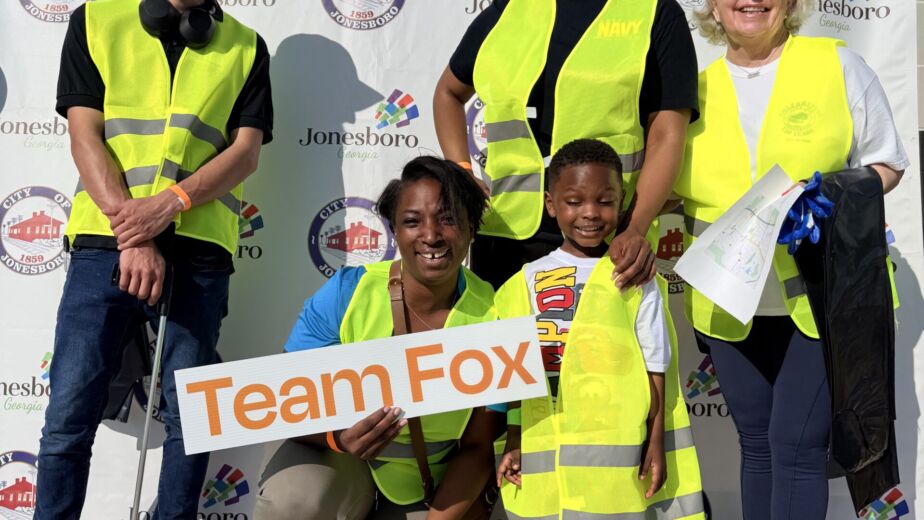
By Councilwoman Santia Fox The Jonesboro Bridge
Every family deserves the peace of mind that, during an emergency, first responders will have the information they need to provide the safest and most effective care possible.
That is why I am excited to share an important update for our community.
After a presentation by Ms. Ellen Divins, who is a resident of Jonesboro to Clayton County Police Chief Kevin Roberts last month, and through the framework established by Georgia’s Logan’s Law (House Bill 631), Clayton County has officially launched its voluntary Logan’s Law Registry. Beginning today, July 13, eligible residents can voluntarily register important information that will assist 911 dispatchers and first responders during emergencies.
This is a significant step forward for public safety, accessibility, and compassionate policing.
Why Logan’s Law Matters
Ms. Divins’ passion for this initiative comes from personal experience.
As the mother of a son with Down syndrome and autism, she understands the uncertainty families face during emergencies. Although her son knows and loves police officers—often calling every officer he meets “my friend”—she also knows that not every emergency allows time for explanations.
For many families, the concern isn’t whether first responders want to help.
It’s whether they have the information they need before they arrive.
What Is Logan’s Law?
Georgia’s House Bill 631, known as Logan’s Law, authorizes the Georgia Crime Information Center (GCIC) to maintain a voluntary registry for individuals with physical, mental, or neurological conditions that may affect communication with law enforcement or emergency responders.
The registry allows families to voluntarily provide information that can immediately alert dispatchers and first responders about a person’s unique needs before contact is made.
Instead of responding without context, officers can arrive informed and prepared.
Why This Registry Is Important
People with autism, Down syndrome, dementia, PTSD, hearing impairments, and other disabilities often communicate differently.
Behaviors that may be misunderstood include:
- Avoiding eye contact
- Remaining silent
- Repeating movements or sounds
- Running away when overwhelmed
- Difficulty responding to commands
- Becoming overstimulated by lights, sirens, or loud voices
Without context, these behaviors can unintentionally escalate an emergency.
With the Logan’s Law Registry, responders receive valuable information that helps them slow down, communicate appropriately, and safely assist the individual.
What Information Can Families Provide?
The voluntary registry allows families to share information such as:
🧡 Name and home address
🧡 Medical or developmental conditions
🧡 Current medications
🧡 Communication preferences
🧡 Behavioral triggers
🧡 Sensory sensitivities
🧡 Effective calming techniques
🧡 Whether the individual has a tendency to wander or elope
This information can be relayed by 911 dispatchers directly to responding officers before they arrive.
Benefits for Everyone
The Logan’s Law Registry helps:
- Protect individuals with disabilities
- Improve officer preparedness
- Reduce unnecessary escalation
- Strengthen trust between families and first responders
- Create safer outcomes for everyone involved
This initiative isn’t just about technology.
It’s about understanding people.
A Community Working Together
I want to recognize Ms. Ellen Divins for bringing this important issue forward and for sharing her family’s story to help protect countless others.
Her advocacy demonstrates how one voice can create meaningful change throughout an entire community.
I also appreciate Chief Kevin Roberts and the Clayton County Police Department for listening, collaborating, and implementing this important public safety resource.
How to Participate
Beginning July 13, Clayton County residents who have qualifying physical, mental, or neurological conditions may voluntarily enroll in the Logan’s Law Registry.
Participation is completely voluntary and is designed to provide first responders with critical information that can make emergency interactions safer and more effective.
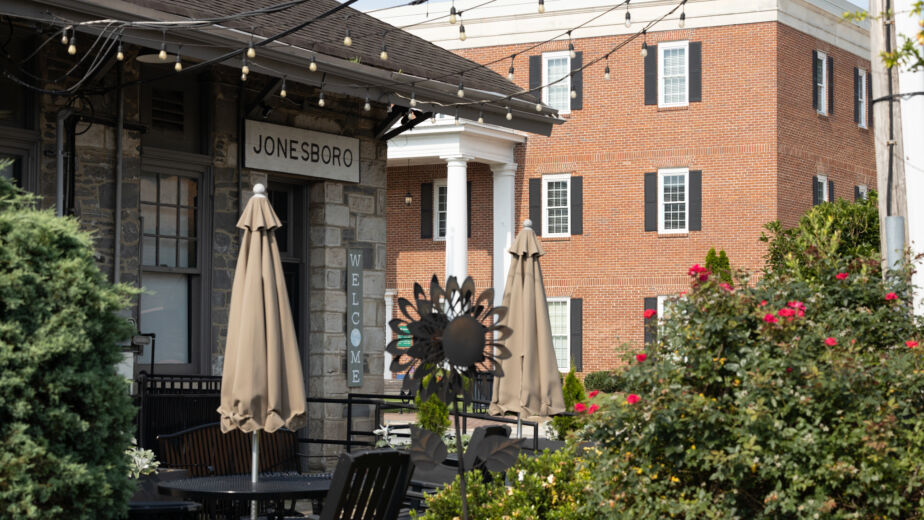
The Jonesboro Bridge
At The Jonesboro Bridge, we believe that building a stronger community means ensuring every resident is seen, understood, and protected.
Logan’s Law reminds us that sometimes the most powerful public safety tool isn’t another piece of equipment—it’s information, compassion, and preparation.
One registry. One informed response. One life protected. 🧡

1 Comment
J.P
Awesome! Thanks for hearing to voice and concerns of Ms. Divins and taken actions.